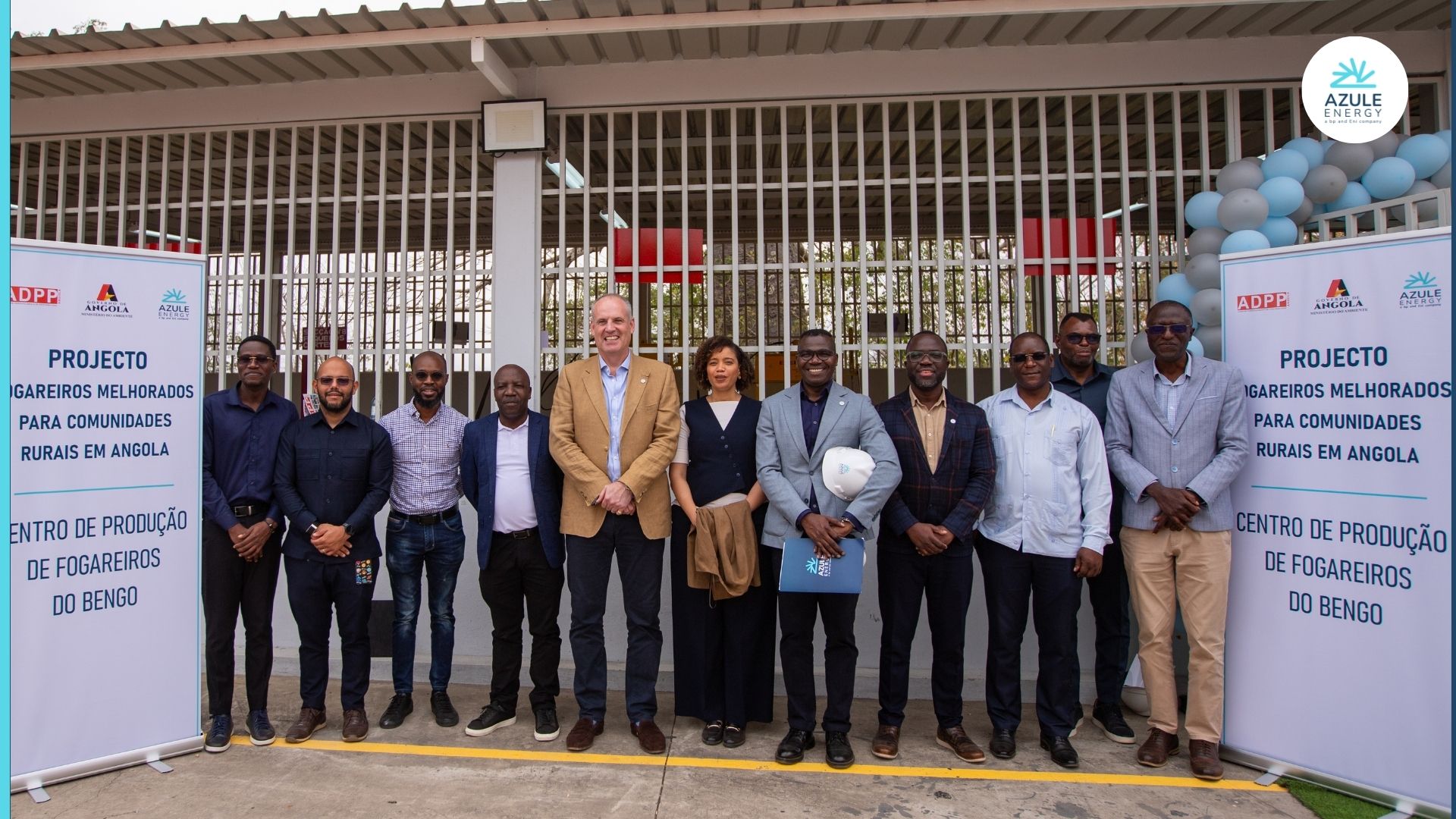
ADPP Angola and Azule Energy today inaugurated, in Caxito, the first Efficient Cookstove Production Centre of the Improved Cookstoves for Rural Communities Project, an initiative that brings together climate action, local economic development and improved quality of life for rural Angolan families.
Located in Caxito, Bengo province, the new centre marks an important milestone in the implementation of one of the largest clean domestic energy programmes in Angola. With capacity to produce approximately 160 cookstoves per day, the unit currently employs 36 workers, 30 of whom are directly involved in the manufacturing process.
The inauguration marked a further milestone towards the goal of producing, distributing and monitoring 300,000 improved cookstoves by 2035, benefiting rural communities in the provinces of Bengo, Benguela, Bié, Cuanza Sul, Huambo and Malanje. The event was attended by the Vice-Governor for the Political, Social and Economic Sector of Bengo province, Mr. José Francisco Bartolomeu Pedro, the Municipal Administrator of Caxito, as well as representatives of the Ministry of Environment and traditional authorities.
“This centre demonstrates that it is possible to create local solutions that contribute to improving health and protecting natural resources. It is a physically modest space, but an ambitious one in its purpose: to produce improved cookstoves that reduce indoor smoke in kitchens, protect the environment by reducing the impact of deforestation by minimising the use of firewood, and it will likewise contribute to the creation of jobs for young people in Bengo province,” said Jaime Luzolo, Energy Transition and Decarbonisation Director at Azule Energy.
The initiative is aligned with Angola's national sustainable development objectives and with the country's efforts to strengthen community resilience to the impacts of climate change.
With the inauguration of the Bengo Production Centre, ADPP Angola and Azule Energy reaffirm their commitment to inclusive and sustainable solutions that place communities at the centre of the country's environmental and economic transformation.